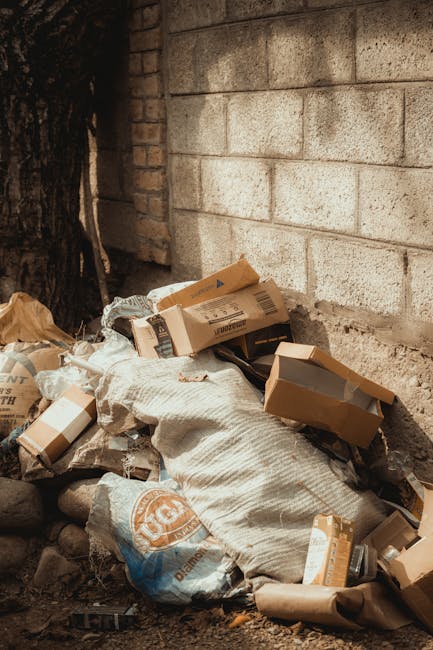
Avoid hidden fees in Mortlake rubbish removal quotes: a practical guide for clear, fair pricing
If you have ever asked for a rubbish removal quote and then felt your stomach sink at the final invoice, you are not alone. Hidden charges have a way of turning a simple clear-out into a frustrating little drama, usually right when you just want the mess gone. This guide is here to help you avoid hidden fees in Mortlake rubbish removal quotes by showing you what to ask, what to check, and how to compare quotes properly before anyone turns up at the kerb.
The good news? Most price surprises are avoidable. With a bit of know-how, you can spot vague wording, understand the usual extras, and choose a provider that explains its costs properly from the start. Let's make the whole thing much less stressful.
Why Avoid hidden fees in Mortlake rubbish removal quotes Matters
Rubbish removal should feel straightforward: you show the waste, get a price, and agree the collection. In practice, though, quotes can become fuzzy around the edges. A provider might mention "access issues," "loading time," "man-and-van minimums," or "disposal adjustments" without spelling out how those terms affect the total. That is where hidden fees creep in.
For homes in Mortlake, that matters even more because jobs can vary a lot. A tidy flat clearance is one thing. A packed loft, a rear-garden pile with awkward access, or a builders' waste job after a renovation is another. If the quote is based on a quick guess rather than a proper assessment, the price can shift on the day. And if the company is not transparent, you are left negotiating while the truck is outside and your driveway is blocked. Not ideal.
Clear pricing also helps you compare services on a like-for-like basis. One quote may look cheaper at first glance, but if it excludes labour, heavy lifting, wait time, or certain waste types, it may end up costing more than the quote that looked slightly higher. Truth be told, the cheapest quote is often the least useful one if it is missing the details.
Expert summary: A fair rubbish removal quote should explain what is included, what could change the price, and what happens if the job turns out differently from the description. If you cannot tell that from the quote, keep asking questions.
How Avoid hidden fees in Mortlake rubbish removal quotes Works
The basic idea is simple: you reduce the risk of surprise charges by comparing quotes the way a good operator would price the job. That means looking beyond the headline number and checking the assumptions behind it.
A proper quote usually reflects a mix of factors:
- Volume of waste - how much is being removed, often measured visually or by load size.
- Waste type - general household rubbish, furniture, appliances, garden waste, builders' waste, or specialist items.
- Access - whether the team can park close by, how many stairs there are, and whether items must be carried a long distance.
- Weight - some materials are far heavier than they look, especially rubble, soil, tiles, and mixed construction waste.
- Time and labour - if the job is more complex than expected, additional labour may be charged.
- Disposal costs - different waste streams can carry different processing or recycling costs.
So, how do hidden fees appear? Usually in one of three ways: the quote omits something important, the company adds a vague "extra handling" charge later, or the job description was never checked properly in the first place. That is why photos, accurate descriptions, and clear written terms matter so much. A quick text conversation is often enough to reveal whether a provider is being careful or merely hoping for the best.
If you are using a service for waste removal in Mortlake, the quote should ideally be tied to the actual items, their location, and the sort of clearance required. The more specific the assessment, the fewer nasty surprises later.
Key Benefits and Practical Advantages
Keeping quote pricing transparent is not just about saving money, although that is obviously part of it. It also makes the whole process smoother and more predictable. You can plan your day, know what to budget, and avoid the awkward feeling of being cornered into accepting extra fees because the van is already there.
- Better budgeting - you know what the job should cost before you commit.
- Cleaner comparisons - you can judge one quote against another properly.
- Less stress - fewer last-minute arguments and no "oh, by the way" extras.
- Faster decisions - clear quotes make it easier to book the right service.
- Better trust - transparent pricing usually signals a more professional operator.
- Fewer delays - if the scope is clear, the collection can go ahead without haggling on site.
There is also a practical benefit people forget: a clear quote helps you choose the right type of service. For example, if you are clearing out a dining room and a couple of wardrobes, a furniture-focused service may make more sense than a general mixed-waste collection. If you are dealing with office paperwork or sensitive documents, something like confidential shredding may be a better fit for the sensitive items, while the furniture goes elsewhere.
And yes, one neat quote can save more than money. It can save a whole afternoon of back-and-forth emails. Which, frankly, is worth something.
Who This Is For and When It Makes Sense
This is useful for almost anyone arranging a clearance, but especially if you are dealing with a job where pricing could shift depending on access, weight, or waste type. In Mortlake, that often includes people clearing homes, flats, garages, lofts, and workplaces.
You will likely benefit from a careful quote if you are:
- moving out and clearing bulky items quickly
- renovating and dealing with builders' debris
- emptying a rental property between tenancies
- disposing of old office furniture or archive waste
- clearing a garage full of mixed household clutter
- getting rid of a mattress, sofa, fridge, or awkward appliance
- sorting a one-off garden clearance after a big tidy-up
This is especially important if you are booking services like house clearance, flat clearance, office clearance, or builders waste clearance, because the final cost can vary more than people expect. A small flat with easy street access can be very different from a first-floor property with narrow stairs and a no-parking street outside. You know the sort of thing.
It also makes sense if you are comparing a specialist removal with a broader service, such as furniture clearance versus general waste collection. The right service can be cheaper if it is matched properly to the job.
Step-by-Step Guidance
If you want the simplest possible route to a fair quote, follow this process. It is boring in the best way, and boring is exactly what you want when money is involved.
- List everything that needs removing. Be specific. "A few bits" is how hidden fees are born. Write down the number of bags, the type of furniture, and any heavy or awkward items.
- Include access details. Mention stairs, basement steps, long walk distances, parking restrictions, lift access, or back-garden entry. A quote based on easy access can jump if a crew arrives to find they need to carry everything through a maze of hallways.
- Send photos from different angles. Wide shots help, but close-ups help too. A pile of mixed waste can look tiny in one image and huge in another. A couple of well-lit photos in daylight often work best.
- Ask what is included. Labour, loading, disposal, VAT if applicable, and any call-out charge should be clear. If a provider says "all included," ask them to define it anyway.
- Check for exclusions. Hazardous items, fridges, plasterboard, soil, paint, liquids, and specialist waste may be priced differently. That does not mean the company is unfair; it just means the job needs proper handling.
- Request the price conditions in writing. If the quote changes only when the facts change, that is fair. If it changes because someone forgot to mention something obvious, not so fair.
- Compare more than one quote. Two or three quotes usually give you a better sense of what is reasonable.
- Confirm before collection day. A quick message the day before can help avoid confusion. Small detail, big difference.
If you need to book quickly, you can also use book online once you have checked the price basis. But do not skip the checking stage just because you are in a hurry. That is how people end up muttering at the front step while someone points at an "extra" charge.
Expert Tips for Better Results
After handling lots of quote conversations, a few patterns become obvious. The best customers are not the ones who know every industry term. They are the ones who are clear, specific, and a little sceptical in the right places. Fair enough, that is sensible money behaviour.
Ask the awkward question early
Ask, "What would make this quote go up?" If the answer is vague, you have learned something useful. A good provider should be able to explain the usual variables without making it sound like a secret club.
Be honest about mixed waste
If your load includes general rubbish, wood, metal, textiles, and a broken fridge, say so. Mixed loads can cost differently from clean, single-material waste. Hiding that detail usually hurts you more than it helps.
Check if there is a minimum load charge
Some companies price by minimum collection size rather than exact volume. That is not unusual. What matters is whether you understand the floor price before you agree.
Use the right specialist service
Not every job belongs in the same bucket. For example, a bulky sofa and old mattress are better handled through a specialist route such as mattress and sofa disposal. Likewise, a broken fridge needs careful handling through fridge and appliance removal. Specialist work is often more predictable when it is identified upfront.
Look for written terms, not just promises
Friendly phone calls are nice. Written terms are better. This is especially true for fees, timing, access assumptions, and cancellation rules. The document matters when memory gets fuzzy later.
Mind the recycling angle
Some providers structure their pricing partly around the amount of material they can recycle or separate. If sustainability matters to you, it is worth checking the company's recycling and sustainability approach. It may not change the fee directly, but it can affect how the waste is processed and explained.
Common Mistakes to Avoid
Most surprise charges happen because of a handful of avoidable mistakes. None of them are dramatic. They are just small gaps that become expensive later.
- Choosing on price alone. The lowest headline number can be missing essential items.
- Leaving out access details. A "simple collection" can become a long carry job very quickly.
- Not declaring heavy waste. Rubble, soil, bricks, and tiles are not the same as bagged household clutter.
- Assuming all appliances are priced the same. Fridges and freezers often need special handling.
- Forgetting about parking or waiting time. Tight streets and busy times can affect the job.
- Accepting vague words like "from price" without context. From what, exactly? That is the question.
- Not checking the cancellation or rescheduling terms. If your plans change, you want to know the rules.
A common one, and people do this all the time, is assuming that "a van load" means the same thing from one company to another. It often does not. Van sizes differ, loading policies differ, and disposal assumptions differ. So if two quotes seem miles apart, do not panic. Ask what each one actually includes.
If the job involves a domestic clear-out, you might also want to check whether a broader service such as home clearance or garage clearance is a better fit than a basic waste collection. The service match can be the difference between a tidy all-in quote and one that keeps growing new elbows.
Tools, Resources and Recommendations
You do not need fancy software to compare quotes properly. A simple checklist, a phone camera, and a note app are often enough. But a few habits make the process much smoother.
- Photo checklist: take one wide shot, one close shot, and one shot that shows access.
- Item list: note every bulky piece, appliance, and bagged pile.
- Question list: write down what is included, what could change the price, and what is excluded.
- Comparison notes: record the total price, the conditions, and the collection window for each quote.
- Payment review: check the company's payment and security information before you hand over card details or agree to a deposit.
For businesses, it can also help to use a more structured service such as business waste removal if the waste is regular or varied. That tends to produce more repeatable pricing than ad hoc one-off arrangements. If you are clearing files, confidential shredding may be more appropriate than just binning paper into a general load.
Householders doing larger projects may also find it useful to compare waste removal with skip-related planning. The page on what can go in a skip can help you understand which items are usually accepted in a containerised solution versus a man-and-van collection. That is handy when you are deciding what route is cheaper overall.
Law, Compliance, Standards, or Best Practice
In the UK, waste removal is not just a casual pickup. Reputable operators should handle waste responsibly, and customers should expect a clear explanation of how items are managed. You do not need to become a legal expert overnight, but it helps to know the broad standards of good practice.
At a practical level, that means the company should be clear about:
- what waste it is able to remove
- whether specialist items need separate handling
- how waste is transported and processed
- how pricing is calculated and adjusted
- what happens if the waste description changes
For your part, accurate descriptions help the operator quote properly and help you avoid charges caused by surprise items. If you include hazardous materials, or even think you might have them, say so early. A route such as hazardous waste disposal may be required, and that is not something to guess about.
Best practice also includes reading the provider's terms and conditions, insurance and safety details, and health and safety policy if they are available. That tells you a lot about how the business operates when things are not perfectly tidy. Which, to be fair, is most clearance jobs.
Also worth checking: if you care about data handling during an office or archive clear-out, a page like confidential shredding is a good sign that the company understands more than just lifting and loading.
Options, Methods, or Comparison Table
Here is a simple way to think about pricing approaches. The right option depends on how much you need removed, how awkward it is to access, and whether the waste is mixed or specialist.
| Pricing method | How it usually works | Pros | Watch out for |
|---|---|---|---|
| Volume-based quote | Price is based on how much van space the load takes | Quick, flexible, good for mixed household waste | Can be vague if the load is not described clearly |
| Item-based quote | Price is tied to named items like sofas, fridges, or mattresses | Very clear for single bulky items | Extras may apply if the item is hard to move or combined with other waste |
| Load-plus-access quote | Price reflects waste size and how difficult the site is to work at | More realistic for flats, basements, and rear access jobs | Needs accurate details from the start |
| Specialist-service quote | Used for items needing separate handling, such as appliances or hazardous waste | Safer and more appropriate for restricted waste streams | Usually costs more than general waste removal, but for good reason |
If you are clearing a home, a domestic-focused service like house clearance may give a more complete price than collecting items one by one. If you are dealing with office items, a dedicated office clearance can simplify the quote by bundling labour and disposal together. Sometimes the neatest answer is the cheapest in the long run. Sometimes not. It depends on the job.
Case Study or Real-World Example
Picture this: a Mortlake resident is clearing a spare room after years of slow accumulation. There is a bed base, two wardrobes, a broken desk, a stack of bags, and a few random bits that have somehow become part of the furniture. The first quote is a tempting low number given over the phone. No photos. No access questions. No mention of stairs.
Then the crew arrives, sees the narrow staircase and the parking restriction, and the price starts to climb. A "small access fee" appears. Then a labour adjustment. Then a note that one of the bags contained heavier mixed waste than expected. By the end, the final bill is far above the original quote. Nobody is happy. It is the sort of situation that leaves you staring at the invoice in the hallway, wondering how the number changed so quickly.
Now compare that with a better approach. The customer sends clear photos, says the room is on the second floor, explains that parking is limited, and lists the bed, wardrobes, desk, and bags individually. The quote comes back a little higher at first glance, but it already includes the access assumptions and labour. Collection day is simple. The team turns up, clears everything, and the final price stays put. Much better.
That is the whole point of planning ahead. A fair quote is not always the cheapest headline. It is the one that still makes sense at the end of the job.
Practical Checklist
Use this before you say yes to any quote. Keep it simple and honest.
- Have I listed every item or pile that needs removing?
- Have I explained access clearly, including stairs, parking, and carry distance?
- Have I mentioned heavy, awkward, or specialist items?
- Have I asked what is included in the price?
- Have I checked what could trigger extra charges?
- Have I requested the quote in writing?
- Have I compared at least two quotes?
- Have I checked the company's payment details and security information?
- Have I read the terms, especially around changes, delays, and cancellations?
- Have I chosen the most appropriate service type for the waste I actually have?
If you can tick most of those off, you are in a much stronger position. Not perfect, just better. And better is often enough to keep costs sensible.
Conclusion
The easiest way to avoid hidden fees in Mortlake rubbish removal quotes is to slow the process down just enough to make it clear. Accurate details, honest photos, written terms, and a few pointed questions can save you from the common traps: vague pricing, unmentioned access costs, and add-ons that appear only after the van has arrived.
That does not mean every cheap quote is bad, or every detailed quote is expensive. It just means the best quote is the one you can understand before anyone starts lifting. If you take one thing away from this guide, let it be this: clarity now is cheaper than arguments later.
If your waste is linked to a bigger clear-out, it can also help to browse related services such as furniture disposal, garden clearance, or loft clearance so you can match the job to the right service from the start. And if you are still unsure, ask one more question before booking. Honestly, that one extra minute can save a lot of grief.
Get a free quote today and see how much you can save.
Frequently Asked Questions
What counts as a hidden fee in rubbish removal?
A hidden fee is any charge that was not clearly explained before you booked, such as extra labour, access costs, heavier waste charges, or disposal add-ons. A proper quote should make these possible extras obvious.
How can I tell if a Mortlake rubbish removal quote is fair?
Check whether the quote explains what is included, what could change the price, and whether the waste type and access details were properly assessed. A fair quote is specific, not just cheap.
Should I send photos before getting a quote?
Yes, absolutely. Photos help a provider judge volume, item type, and access. One clear image can prevent a lot of guesswork, especially for mixed loads or bulky furniture.
Do all rubbish removal companies charge for stairs?
Not always, but many will factor difficult access into the price if it increases labour or carrying time. That is why it is important to mention stairs, lifts, and carry distance upfront.
Why do some quotes look low at first and then go up later?
Usually because the first figure was based on limited information. If the waste turns out to be heavier, more awkward, or harder to reach than described, the price may change.
Is it cheaper to book a full clearance service or individual item removal?
It depends on the job. For several bulky items or an entire room, a fuller service such as house clearance or office clearance can be better value than booking multiple separate removals.
What should I ask before accepting a quote?
Ask what is included, what is excluded, whether VAT is included if relevant, what happens if access is difficult, and whether the price is fixed once the details are confirmed.
Are fridges, mattresses, and sofas priced differently?
Often yes. These items can need specialist handling or separate disposal routes, so they may be quoted differently from standard mixed waste.
Can I avoid hidden fees by choosing the cheapest quote?
Not reliably. The cheapest quote can still have exclusions or extras. It is better to compare the details, not just the headline figure.
What if I realise I forgot to mention something after booking?
Tell the company as soon as possible. Honest updates are much better than surprises on collection day, and they give the provider a chance to adjust the quote fairly.
Does recycling affect the price of rubbish removal?
It can. Sorting and recycling certain materials may affect how a provider prices or processes a job. If sustainability matters, check the company's recycling and sustainability information.
Should I read the terms and conditions before booking?
Yes. That is where you will usually find the rules on changes, cancellations, excluded waste types, and any circumstances where the price can be adjusted.
What is the safest way to compare rubbish removal providers?
Use the same item list, the same photos, and the same access details for each quote. That keeps the comparison fair and stops one provider seeming cheaper just because they were given less information.